To secure a storage container, check the doors, the lock, and how the people who use it behave. Strong walls aren't enough if a key gets passed around without tracking, if the lock doesn't close properly, or if nobody responds to an alert. The goal is to reduce the risk of break-ins and spot problems quickly. No solution offers absolute protection.
Before buying an accessory, think about the container and how you use it. Supplies you collect each week, a shared workshop and tools kept on a construction site need different security arrangements. Ask the supplier to list the equipment, confirm that it fits and state who will install it. A generic photo does not show that the equipment is included. A container for this type of storage: Container 20 ft Standard · Used · last trip · Beige.
Start with how you'll use it and who's allowed in
List the contents, any sensitive items, and what happens if something is stolen or you're shut down: replacing supplies, idling a crew, or losing documents are different problems. Note times when nobody's around, vehicle access, and what surveillance is possible on site. This helps you pick the right protection, not just something that looks tough but isn't useful.
Decide who opens, who closes, and who handles problems. If several companies share the container, assign these tasks before delivery. Be clear whether the container is just for storage or if people work inside: an external lock must not trap anyone inside. For a space that's occupied or converted, have the professional doing the plans handle access and exit.
| Situation | Priority to address | Organization | Limit to keep in mind |
|---|---|---|---|
| Storage opened every week | Compatible lock and checking it's in good shape at each visit | One person in charge, keys labeled, and an inventory of goods | A long stretch without a visit delays finding out about an incident |
| Workshop shared by several teams | Know who has access and check the lock | Handover register, responsible person per time slot, and departure procedure | If nobody tracks who receives the shared code, you cannot know who still has access |
| Remote site or items essential to your business | Locks, an alarm and a plan for responding to alerts | Transmission test, reachable person, and fallback solution for goods | An alert cannot prompt a response if it is not transmitted or nobody is available to receive it |
Choose a location that remains visible and practical
On the site plan, mark areas visible from normal work positions and places where an incident could go unnoticed. If possible, keep the doors in view without unnecessarily showing what is stored inside. A fence, entrance controls and lighting can help, but they do not replace checking the container’s lock.
Leave enough room to open the doors, use the lock and carry items through. Do not rely on blocking the doors with a vehicle, pallets or another container each night. This could prevent necessary access, disrupt work or endanger someone left inside. Authorized users must still be able to use the container normally.
Test the lighting at the time you will actually lock up: the person in charge needs to see whether the locking parts are in place and spot any problem. If an alarm is fitted, test its transmission from the final location with the doors closed, and check who receives it. Review these arrangements when the teams, routes or site layout change.
Check the doors before adding an anti-theft device
Ask for recent photos of both doors, handles, locking bars and the places where the accessory will be fixed. Have the doors fully opened and closed with the container properly installed. The parts must line up and lock without abnormal distortion. An extra lock will not fix a misaligned door or a damaged mounting point.
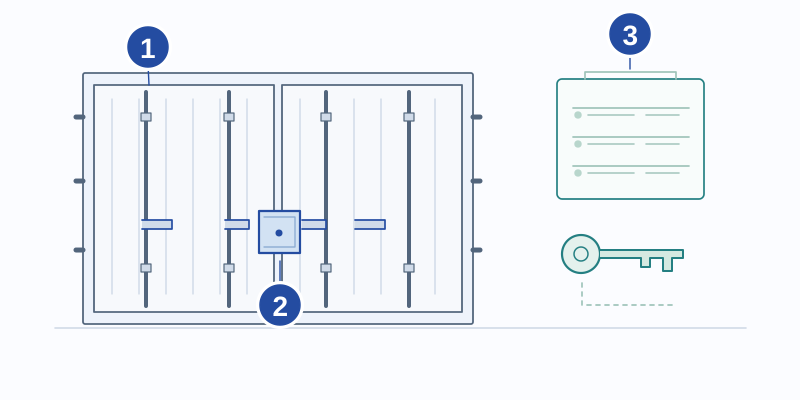
Visual reference
- Doors and locking bars
- Additional protection
- Key management
Illustrative diagram, not to scale.
On site, observe the hinges, repairs, and corrosion around the locking mechanism. Distinguish a superficial mark from a loss of material that requires professional examination. If the doors worked at the depot but become difficult after installation, have the leveling and supports checked before forcing or modifying the mechanism. Keep reference photos to compare changes.
Understand what each device protects
A padlock, padlock protector and locking bar serve different purposes. Ask what each one protects, where it is fixed and how you will use it each day. A product name or security claim is not enough: ask for the exact model and its documentation.
A stated rating may apply only to a particular lock, its accessories and a specified installation method. It does not automatically apply if you change a part or the fixing. Check that the manufacturer’s documents describe the proposed assembly. Whatever equipment you choose, keep checking the locking mechanism and controlling site access.
- Photograph and measure the mounting points: clear openings, spacing between parts and condition of the mountings.
- Note the allowable diameter and useful clearance of the shackle from the manual; also measure the interior space of the housing.
- Check the size of the padlock body, access to the key, and whether you can remove the whole assembly when the doors are closed.
- Try handling it with gloves and under usual working conditions, without having to force the parts.
- Check the exact models in the manufacturer's documentation and keep the manual for the installed assembly.
| Device | Question to ask | Other arrangements needed |
|---|---|---|
| Padlock | Does it fit the locking mechanism and remain easy to operate? | Key management and recommended maintenance |
| Padlock protector | Does it protect the chosen padlock without hindering the doors? | Check attachment and corrosion |
| Additional bar or lock | Is it compatible with these door leaves and locking bars? | Complete test after installation |
| Detection or alarm | Does the alarm transmit reliably from this location, and can it run on its own power supply for as long as needed? | Person assigned to respond to alerts |
Prepare installation and test the assembly
Make sure it's clear who supplies the accessory, who installs it, and what work is planned. Any drilling, fastening, or welding must suit the chosen spot. Ask how the modified areas will be protected against corrosion and water getting in. A general tutorial isn't enough when you're modifying a door or the structure.
On delivery, test the assembly with the keys that will actually be used: doors open, doors closed, accessory fitted, then removed. Check that these actions still work under the usual conditions on site. Note the model installed and the maintenance instructions. Report any rubbing, unusual play, or difficulty before you load the container.
- Check that the installed models match the offer.
- Check that it closes without pressing, pulling, or lifting a door leaf in an unusual way.
- Have the future user try the assembly, not just the installer.
- Keep a photo of the closed assembly and a photo of the attachment points.
Set up a closing routine
Keep a list of authorized people and the keys or access means issued. Plan for keys to be returned at the end of a job and what to do if a key goes missing. A shared code can remain known to people who have left the site: assign someone to manage it. Also plan how to open and close when the usual person in charge is away.
Whenever the container is locked, the designated person checks that no one is inside, that the doors and lock are properly engaged, and that any alarm or sensors are switched on. Note and report problems instead of forcing the locking mechanism. Adjust the checks to how often the container is opened, any work going on, and any incidents you've noticed.
Test the monitoring and respond to problems
An alarm is only useful if it works on site and someone handles the alert. Test it with the people who should receive it. Ask how it's powered, when to change the batteries, and what the network limits are. A camera or sensor adds protection, but it doesn't close the door or send someone to intervene for you.
Inspect the accessories according to the manufacturer's instructions and after anything unusual happens. If a key sticks, a part bends, or you suspect a break-in attempt, don't force the mechanism. Take photos of the marks, follow your site’s procedures to protect sensitive contents, and have the lock examined. Replacing a part must keep the whole setup compatible.
Information to send to the supplier
Include the SKU or container sheet, photos of the doors, intended use, and site access details. List the equipment you want, installation, tests after installation, and maintenance. Ask what's included and what's an option. A new or used container doesn't necessarily have the same equipment as the catalog photo.
The offer must specify the container, accessories, and services included. Also read the contract terms and check the requirements that apply to your project with the relevant professionals. The catalog helps you choose; before relying on equipment to protect your goods, have the supplier confirm it's there.
Checklist before putting into service
- Use and contents described.
- Authorized persons and person responsible for closing identified.
- Doors and basic mechanism checked.
- References and compatibility of accessories confirmed.
- Installation and protection of modified points specified.
- Opening and closing tested after installation.
- Keys issued and loss procedure planned.
- Any alert tested with its recipient.
- Maintenance instructions and reference photos kept.
Find the right type of container
Containers to compare
Models in stock. Indicative prices exclude tax, transport, and unloading. The images show the models: ask for recent photos of the container you are buying.
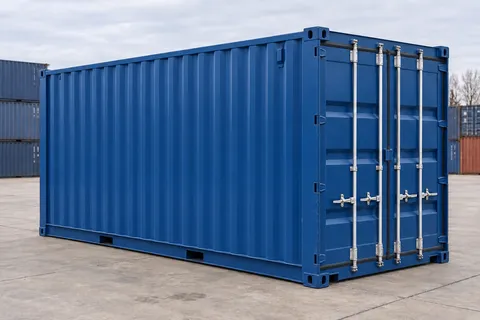
CA-20-STANDARD-NEW-BLUE
Container 20 ft Standard · New · one trip · Blue
New · one trip / Blue
€1,660.5Indicative, excl. tax
Request an offer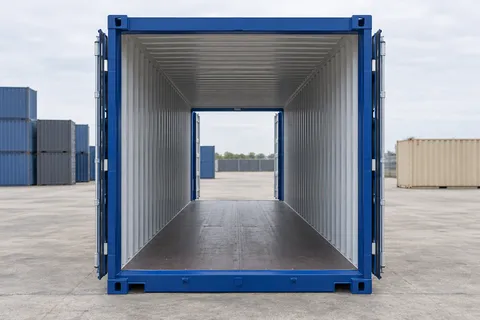
CA-20-DOUBLE-DOOR-NEW-BLUE
Container 20 ft Double Door · New · one trip · Blue
New · one trip / Blue
€2,747Indicative, excl. tax
Request an offer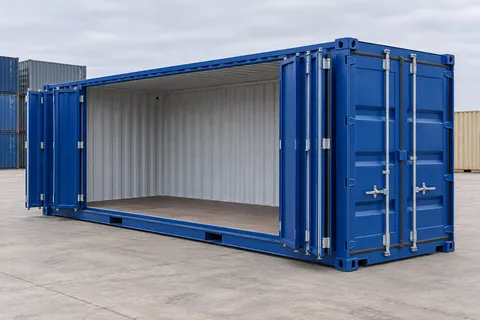
CA-20-OPEN-SIDE-NEW-BLUE
Container 20 ft Open Side · New · one trip · Blue
New · one trip / Blue
€4,428Indicative, excl. tax
Request an offerPractical questions
Is a padlock protector enough to secure the storage?
A padlock protector shields part of the locking mechanism, depending on how it's designed and installed. It needs to fit the padlock and work with doors that are in good shape. You still need to manage access and keep an eye on the site. It does not make the container break-in proof.
Does a new container necessarily include an anti-theft device?
Don't assume it does. Ask for the list and models of the equipment on the container you're buying. A picture or a condition label doesn't replace this confirmation.
Should the padlock be changed when a key goes missing?
Follow the procedure set up for your lock and ask the supplier how to stop the lost key from being used. Depending on the equipment, have the lock replaced or reconfigured so the lost key no longer works. A missing key can still open the lock until the system has been changed.
Technical references
- ABUS — technical sheet ConHasp GRANIT215
Examples of locks and protections that work together from this manufacturer. The resistance levels shown apply only to the products tested together; they don't apply to all equipment offered by Container Origin.