To choose a refrigerated container, start with the products you need to keep and how you'll get to them. Then pick the length. Enough storage space, a temperature reading and a sound container body do not prove that the refrigeration unit can maintain the conditions your products need.
This guide helps you compare the 20- and 40-foot refrigerated models in the catalog and prepare your request. Describe your needs, check the container offered, and ask for details on the services included in the quote. The temperatures used in the examples describe a need; they don't guarantee the equipment's performance. A model to compare: Container 20 ft Refrigerated · Used · last trip · Beige.
Describe the products before choosing the refrigeration unit
Write down the type of products, their packaging, the maximum amount stored at one time, their temperature when they arrive, and the temperature to maintain. Specify the acceptable temperature range, how long they'll be stored, and the records you need to keep for your business. If products have different needs, ask if they can be stored together.
Keeping already cold goods cold and cooling still-warm products are two different needs. A container meant to maintain a transport temperature may not be able to cool your products within the time you want. Describe this need separately and have the refrigeration unit’s capacity checked against that need.
Draw the storage layout and the passages you need
The volume in cubic meters doesn't tell you how many pallets you can store or how to reach them. Draw the packaged products, any shelving, the door opening, and the path to reach items at the back. Plan for the maximum stock, not just the usual amount.
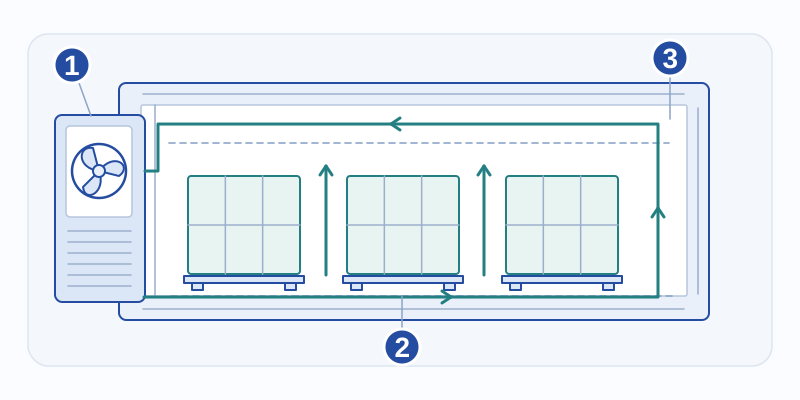
Visual reference
- Refrigeration unit
- Cargo arrangement
- Illustrative airflow
Illustrative diagram, not to scale.
Keep the airflow paths required for the model clear. Loading recommendations include having goods at the right temperature before loading, proper distribution, and respecting the load line. Ask for the loading plan and instructions for the unit offered: packaging, pallets, and shelving can block air flow.
- Record the dimensions and weights of the packaged goods, including pallets and other supports used to move them.
- Mark the routes for reaching the goods and show which way the doors will face on the site plan.
- Have the spaces to keep clear for air flow and maintenance confirmed.
Choose between 20 and 40 feet based on storage and access
A 20-foot can be easier to place when the site lacks length. A 40-foot offers more length, but you need to be able to reach the back, get in and out, and maneuver the delivery vehicle. Compare the interior dimensions and the door opening width and height of each model, not just the outside length.
Bigger isn't always better. Stock spread out in a long space means more walking; a space too small can prevent separating batches or following the loading plan. Have your actual layout studied. To compare sizes, keep the same requested temperature and the same constraints.
| Your constraint | Question to ask | What to get |
|---|---|---|
| Limited space along the length | Do the truck and the unit have the clearances they need? | Site plan showing where the container will go and the access routes |
| Stock spread over a long length | How can you reach each batch without disturbing the other goods? | Interior plan and routes for moving goods |
| Bulky products or packaging | Do the door opening and loading height work for you? | Useful dimensions of the container you're offered |
| Frequent openings | Which tests match this level of access? | Agreed conditions of use and test method |
Check the refrigeration unit, not just how the container looks
Ask for the brand, model, and serial number of the refrigeration unit, its year if known, maintenance records, and recent work done. Words like new, used, very good condition, or last trip don't tell you how it actually runs. A clean container body doesn't mean the compressor, fans, and alarms are in good shape.
For a used unit, ask what was tested, who tested it, when, and under what conditions. The report should show the set temperature, the temperature around the container, how long the test ran, and any problems found. Get in writing what repairs are planned, what equipment is missing, and what the offer doesn't cover. Ask what the inspection actually includes—its name alone doesn't guarantee all performance.
Check the power supply and placement before delivery
Take a photo of the connection point and give the installation details to a qualified professional. The voltage, phases, frequency, required current, plug, and electrical protective devices must match the unit you're getting. Specs from another model or manufacturer aren't enough.
For the site, show the access routes, obstacles, final location, planned supports, and space around the unit. Keep room for maintenance, even when the container is full. Make clear who handles transport, installation, connection, adjustments, and testing after setup.
Plan for door openings, alarms, and daily monitoring
Describe your operating hours, how often doors open, how long they stay open, and busy periods. Ask what information is displayed, recorded, or sent, and which accessories are included. A recorder, humidity sensor, or extra monitoring may be options. Just because it's called refrigerated doesn't mean those features are there.
Decide who reads the logs, responds to alarms, and calls maintenance. If a cooling failure would disrupt your business, tell the professionals working on your project. Plan backup measures that fit your goods and site. They're not automatically included in the container price.
Compare all costs up to actual use
Compare offers for the same use: size, condition, unit, equipment, inspections, destination, and included services. Separate the indicative container price before tax, transport, unloading, connection, and any extra services. Also think about maintenance. The container's length doesn't tell you its power consumption or electricity cost.
Look at the 20- or 40-foot refrigerated categories, and if you want a used model, check the used refrigerated selection. The price guide helps you build a complete budget. When you ask for a quote, include your needs and site plan: the supplier can then confirm the container, equipment, tests, and offer terms.
Information to prepare before requesting a quote
- Products, packaging, maximum stock, and temperature when goods arrive.
- Temperature to maintain, acceptable range, and whether you need to hold cold or cool down warm goods.
- Layout of goods, traffic flow, and access to batches.
- Hours, opening frequency, and desired monitoring.
- Address, truck access, final location, and available electrical information.
- Unit model and number, maintenance, tests, and equipment to be confirmed.
- Separate items for purchase, taxes, logistics, connection, and commissioning.
Explore suitable models
Containers to compare
Container price excluding tax. Delivery and unloading costs depend on your postcode and access. Ask the supplier to confirm the included equipment and the container's performance in the quote.
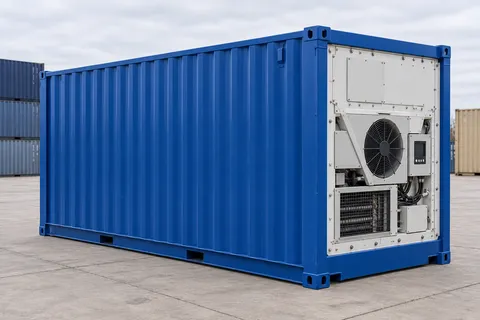
CA-20-REEFER-NEW-BLUE
Container 20 ft Refrigerated · New · one trip · Blue
New · one trip / Blue
€16,687Excluding tax
Request an offer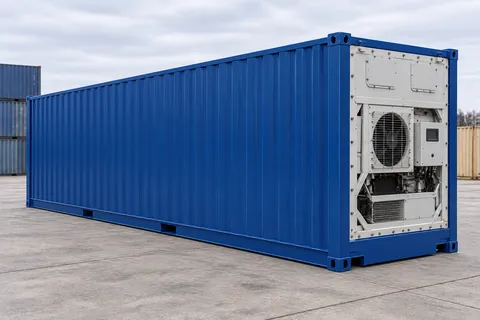
CA-40-REEFER-NEW-BLUE
Container 40 ft Refrigerated · New · one trip · Blue
New · one trip / Blue
€25,297Excluding tax
Request an offer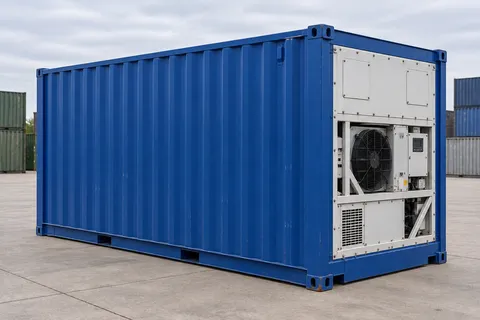
CA-20-REEFER-A-BLUE
Container 20 ft Refrigerated · Used · excellent condition · Blue
Used · excellent condition / Blue
€7,564.5Excluding tax
Request an offerPractical questions
Can a refrigerated container cool products that are still warm?
Don't assume it can. Tell us the weight, the temperature when it arrives, and how quickly you need it cooled. Have someone check that the unit can cool your products under those conditions. Just because it can keep goods cold doesn't prove it can cool them down.
Does a used container's condition grade confirm that its refrigeration unit works?
No. Ask for the unit's model and serial number, its history, and a test report for your intended use. Have the condition of the container body and refrigeration system described separately.
Can you tell the power consumption from whether it's a 20-foot or 40-foot container?
No. The unit, the temperature you set, the weather, the load, and how often you open the doors all matter. Ask for figures that match your situation. Distinguish between electrical power, energy actually consumed, and what it costs under your electricity contract.
Should you choose volume or temperature first?
Start with what your products need and how often you'll use it, then check the layout and size. Both the refrigeration unit and the space have to work for you. A big container doesn't make up for a cooling system that doesn't fit your needs.