Two containers of the same size can be in very different condition. Check the doors, floor, corrosion, and repairs. Words like "new," "used," or "very good condition" help you sort through options, but they don't replace looking at the actual container you're buying. Decide how much wear you can accept for your project, then check what needs to be inspected or repaired before use.
Start with how you'll use it: what goods will you store, how often will you open the doors, how much does appearance matter, and what work can you arrange? Figure out these needs before comparing conditions in the catalog. A label like "good condition" doesn't tell you everything. Ask the seller to spell out the condition of the container they are offering. A used container to inspect: Container 20 ft Standard · Used · last trip · Beige.
Separate appearance, function, and intended use
Appearance covers paint, dents, signs of use, and visible corrosion. You also need to check the structure, doors, locks, seals, and floor. Then see if the container suits what you want to do with it. A nicely painted container doesn't prove it works well or meets your needs.
Be clear about what matters to you and how to check it. For tools you use every day, doors that open easily might matter more than even paint. For boxes that can't get damp, inspect the walls and roof, then plan how to keep moisture out. If the container will be seen by the public, also note which appearance flaws you can live with.
- Specify acceptable appearance flaws: signs of use, color differences, or small dents, after checking they don't cause problems.
- List your needs: doors you can access, a lock that works, a floor suited to your goods, and enough room to get inside.
- Flag anything that needs a specialist's opinion, especially cutting into the structure or using it as housing.
Understanding the four conditions in the ContainerOrigin catalog
The conditions below help you filter the catalog. They give you an idea of what to expect in terms of appearance. Then look at the photos, description, and checks for the available container. The category name alone doesn't tell you whether a specific flaw is present or not.
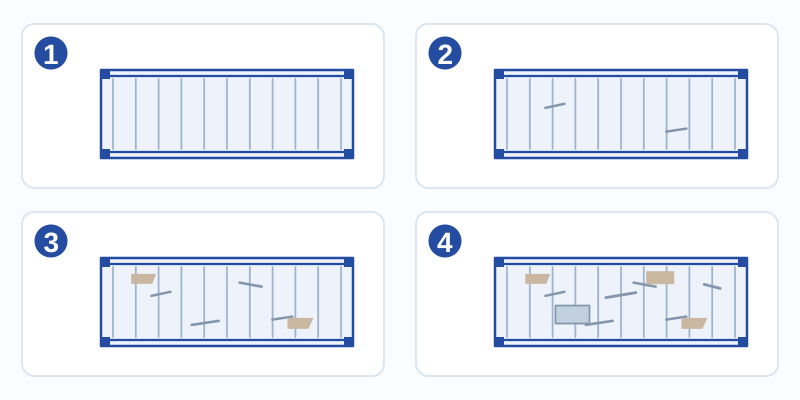
Visual reference
- New · one trip
- Used · excellent condition
- Used · good condition
- Used · last trip
Illustrative diagram, not to scale.
A listing may show a sample model before a specific container is assigned to you. Distinguish the catalog reference from the number of the container that will be delivered. A catalog photo isn't necessarily the container you'll receive.
| Catalog condition | What the name tells you | What to check |
|---|---|---|
| New · one trip | Looks almost new; slight handling marks may still be present. | Recent photos, actual configuration, accepted marks, and door operation. |
| Used · very good condition | Limited visual wear, with possible signs of use. | Interior, exterior, possible repairs, and the seller's criteria for this condition. |
| Used · good condition | Possible marks, scratches, dents, or surface corrosion. | Location and severity of defects, seals, floor, closures, and work needed. |
| Used · last trip | More noticeable wear; repairs and usage limits need special attention. | Condition of load-bearing parts, repairs done or needed, and the use agreed with the seller. |
Compare the words sellers use
One seller might use A for a first trip, another for a used category. So ask what the letters, colors, and trade names mean in each offer. A definition found on another site doesn't necessarily apply to the container you're comparing.
"First trip" or "one-trip" usually means a container that's almost new after its first journey. That doesn't mean it's never been handled. "Last trip" is a commercial used category: the name doesn't prove the container can still travel by sea or tell you how much life it has left.
If the offer says WWT, often expanded as "Wind and Watertight," ask what watertightness checks were done and under what conditions. A container advertised as watertight can still get condensation. For "Cargo Worthy," ask what was inspected and what documents are available for the transport you have in mind. These terms don't replace checks specific to your project.
For a sale "as is" or "AS IS," read the declared defects, exclusions, and work you'll be responsible for. The contract's consequences depend on the offer and local rules. Compare specific things: the part involved, the defect observed, the check done, the repair included, and the limits stated.
What the CSC plate lets you check
The International Maritime Organization's CSC Convention covers the safety of containers used in international transport, including their approval and later inspections. The plate and related documents are useful for these operations. Having them doesn't prove the container is currently suitable for any transport or lifting job.
To transport the container, have the relevant professionals check its documents and condition for the planned route. For storage, also inspect the doors, walls, roof, and floor. A plate alone won't tell you about cleanliness, previous cargo, or moisture inside.
The CSC also doesn't certify that a container can become a workshop open to the public or a home. Those conversions require other technical studies and local checks. Treat them separately from choosing between catalog conditions.
Choosing acceptable defects for your use
The cheapest isn't always the best fit, and you don't always need the best-looking one. Rank your requirements: what must be fixed before delivery, what you can have repaired later, and defects you'll accept. That way you can compare offers on the same criteria.
| Project | Check priority | What you can accept and what still needs checking |
|---|---|---|
| Functional tool storage | Doors, closure, floor, walls, roof, and access organization. | Paint marks may be acceptable; a closure defect still needs fixing before use. |
| Container will be highly visible on site | Photos of all visible sides, color, and repairs. | Compare both options: a container with a better exterior finish or one needing repainting, including painting costs and disruption. Do not let appearance hide technical defects. |
| Archives or sensitive goods | Cleanliness, signs of water getting in, condition of seals, and how you'll manage moisture. | The condition label doesn't tell you whether the storage conditions and protection for your goods are suitable. |
| New transport or conversion | Structural condition and checks specific to the operation you're planning. | Have the transport or transformation checked by the relevant professionals. The trade name alone is not enough to confirm that the operation is possible. |
Compare the full cost to get it into service
Compare what each offer includes: the container, transport, unloading, site preparation, work, and equipment needed. Separate what's included from what you still need to get a price for. The quote will specify taxes and commercial terms for your destination.
For a used container, describe the work before budgeting for it. A paint touch-up, replacing a seal, and a structural repair require different skills. Make sure you know who does the work, where it's done, and how the result will be checked at the end. Also consider the access needed and how long the container will be out of use.
Age and stated condition alone aren't enough to figure out how much life is left. The environment, maintenance, history, and actual defects matter too. If an important point isn't known yet, note it in your comparison instead of counting on uncertain savings.
Gather documents to choose and check delivery
For each offer, keep the catalog reference, the container number if it's already assigned, photos of the outside and inside, the declared defects, and the work included. Note the date of the photos and any questions still unanswered. These details are more useful for choosing than a string of reassuring adjectives.
Keep these documents handy on delivery day. Compare the container you receive with what was agreed, photograph any visible differences, and contact the supplier to sort them out. Test the doors once the container is on its final supports: how it's placed can change how they work.
Before you settle on a container condition
- Describe how you'll use the container, what you'll store in it, and how often you'll open it.
- Keep technical requirements separate from aesthetic preferences.
- Ask the seller to define each condition grade.
- Distinguish the catalog reference from the number of the actual container offered.
- Check recent photos and compare the listed defects with what you're willing to accept.
- Inspect the doors, seals, floor, and repairs based on how you'll use the container.
- If terms like WWT, Cargo Worthy, or as-is are used, clarify exactly what they mean.
- Handle transport or modification checks separately.
- Compare the container, transport, installation, and any work on the same scope of services.
- Keep all documents so you can verify that the delivered container matches the offer.
Find the right type of container
Practical questions
Is a first-trip container completely free of marks?
Transport or handling marks can still be present. Decide what appearance you expect based on photos and the offer's terms, then check that the essential functions work. The term 'first trip' doesn't guarantee there won't be any marks at all.
Does grade A always mean the same condition?
No. The letters and descriptions vary from seller to seller. Ask for the definition in each offer and compare the actual defects, inspections, and repairs. A letter alone doesn't prove that two listings describe the same condition.
Does 'last trip' mean the container can still be shipped?
This commercial label doesn't prove the container is currently fit for transport. Have its condition and paperwork checked by the relevant professionals. For storage, you still need to examine the walls, roof, closures, floor, and moisture.
Technical references
- International Maritime Organization — CSC Convention
Safety rules and inspections for containers used in international transport. These inspections do not guarantee the condition stated by the seller or the possibility of converting the container.