Before placing a container, prepare three zones: the vehicle's route, the area where it will unload, and the final spot. Having enough room for the container doesn't mean the truck can get in, position itself, and unload. Likewise, easy access doesn't guarantee that the ground and supports can bear the load.
Before delivery, gather a plan with measurements, photos with locations marked on that plan, information about the ground, and a list of everyone's tasks. The carrier and the ground preparation professional can then choose a suitable method. These documents don't replace their assessment: no single slab or support design suits every project. A model to compare: Container 20 ft Standard · Used · last trip · Beige.
Draw access, unloading, and placement separately
Start with the data sheet of the container you've chosen. Draw its place on the site plan with its external dimensions, the door side, and any protruding equipment. Add the path of the bulkiest objects and the space to move them in front of the doors. External dimensions don't tell you the door opening width or the space needed for daily loading.
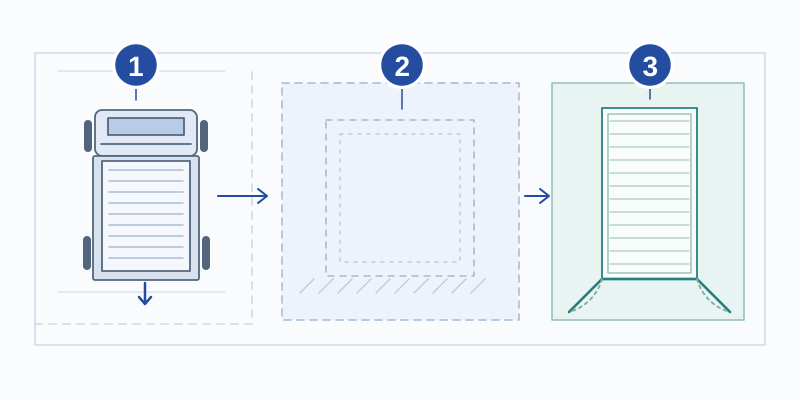
Visual reference
- Truck access
- Working area
- Position and doors
Illustrative diagram, not to scale.
Then draw the truck's route from the entrance it will actually use. Identify turns, the open gate, narrow passages, and the exit. Finally, indicate where the vehicle and its equipment can work. This area is different from the container's final spot: unloading equipment needs space and stable supports.
- Label the truck route, unloading area and final container position on the plan.
- Reference the photos with the same letters or numbers as on the drawing.
- Note measurements at narrow passages and other restricted points, not just at the gate.
- Mark permanent obstacles and those that can be moved before delivery.
Check the weight the ground can support
Gather what you know about the ground: natural soil, fill, old slab, prepared platform, slope, or recently worked areas. Note cracks, settlements, wheel tracks, and places where water stays after rain. These observations help the professional, but they don't measure the ground's bearing capacity.
A hard surface can hide uneven ground or a buried structure. Ground that's dry during the visit can also degrade after rain. Have the loaded container, the vehicle, and the unloading equipment assessed separately: they don't rest on the same spots and don't exert the same forces. A car passing or a photo doesn't prove the ground is suitable.
Have the supports designed for the ground and load
The choice depends on the ground, the actual mass of the container, its contents, and planned modifications. Even for a short period, these points still need checking. Adding supports at random doesn't necessarily distribute the load better: their position and strength must match the planned layout.
If a slab already exists, look into its characteristics and history instead of assuming it's strong enough. If work is needed, have the professional define the preparation and checks. Distinguish between work to support the container and work to let the vehicle arrive and the handling equipment stabilize.
| Situation or solution considered | What to check | What to watch for |
|---|---|---|
| Existing slab | Composition, condition, capacity, and compatibility with the planned supports | A flat slab is not necessarily strong enough |
| Point supports defined for the project | Location, sizing, stability, and level of each support | Supports that fit another container may not fit yours |
| Prepared and compacted platform | Nature of layers, ground treatment, and planned checks | The visible surface layer is not enough to know the whole support |
| Uncertain soil, fill, or slope | Assessment of the ground and necessary work before booking | Do not make up for uncertainty with improvised shimming on the day |
Deal with water and utilities before earthworks
Watch where water comes from and where it goes. Find the low spots, downspouts, and runoff from neighboring buildings. Your site plan should keep water from pooling around the supports or making the truck route impassable. Plan drainage together with the rest of the site: diverting water to another area can just move the problem.
Before you drill or dig, locate known utilities and structures: pipes, cables, manholes, pits, or tunnels. Tell the carrier about them too. A wheel or equipment support must not rest on a fragile area without checking it first. Pass the information to the professionals and follow local verification procedures.
Keep the spot usable after placement
Check the path people will use, not just the truck's. Where will the person opening the container stand? How will a long item or a pallet get through? Which doors need to stay accessible when the storage is full? Reserve the clearances you need on the plan, then mark them before delivery so they don't become a parking spot or a pile of materials.
Also leave room to inspect the outside, maintain the doors, and reach the equipment. A refrigerated or modified container may need clearance for ventilation, electrical connections, or maintenance. Check the container's data sheet and the equipment manuals: its length in feet alone won't tell you these needs.
Settle the last details before booking
Send the dated plan, photos with the spots marked on the plan, and a description of the work. Get it in writing who prepares the ground, builds the supports, unloads, and places the container in its final spot. Delivery, unloading, and leveling may be billed separately. Don't assume everything is included just because it happens on the same day.
List what still needs to be finished before delivery: unfinished supports, blocked access, unmarked location, or unloading method still to be chosen. A change of location, heavy rain, or recent work can call the initial assessment into question. Tell the provider before the truck leaves.
Check the placement, then keep an eye on the supports and doors
During handling, stay out of the area the operator defines and don't walk under the load. After placement, when access is declared safe, check the position against the plan: door direction, supports, clearances, and access to equipment. Test opening and closing without forcing. Take photos to keep a record of the condition at delivery.
At commissioning, and after any major change, look at the doors, accessible supports, and signs of water or settling. If a door gets harder to close or something moves, have the supports and installation checked. Don't try to move a support yourself under a loaded container. Have the situation examined by the relevant professionals.
Site information to send
- Chosen container model and equipment.
- Container footprint, doors, and object paths drawn.
- Route of the vehicle photographed and measured.
- Working area separate from the final location.
- Ground conditions and uncertain areas flagged.
- Known utilities and structures located.
- Water and drainage examined.
- Supports and preparation defined for the project.
- Tasks of each party and included services specified.
- Blocking points resolved before booking.
Find the right type of container
Containers to compare
Models in stock. Indicative prices exclude tax, transport, and unloading. The images show the models: ask for recent photos of the container you are buying.
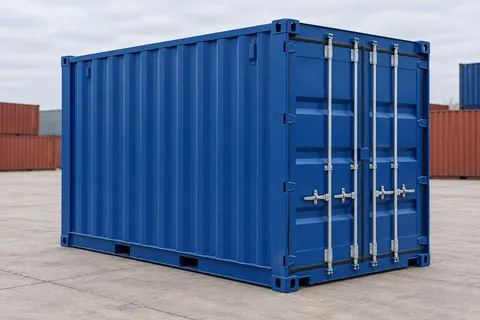
CA-10-STANDARD-NEW-BLUE
Container 10 ft Standard · New · one trip · Blue
New · one trip / Blue
$3,321Indicative, excl. tax
Request an offer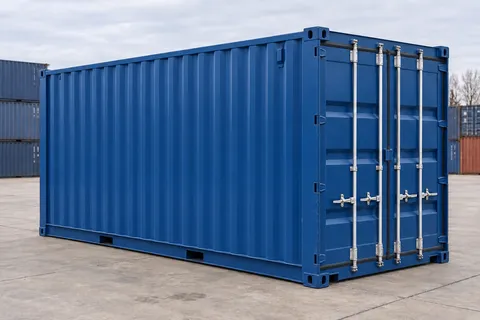
CA-20-STANDARD-NEW-BLUE
Container 20 ft Standard · New · one trip · Blue
New · one trip / Blue
$2,378Indicative, excl. tax
Request an offer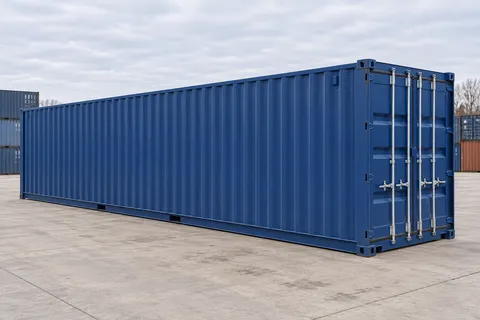
CA-40-STANDARD-NEW-BLUE
Container 40 ft Standard · New · one trip · Blue
New · one trip / Blue
$3,567Indicative, excl. tax
Request an offerPractical questions
Is a concrete slab always necessary?
No. The right solution depends on the ground, the container, and the planned load. Have it defined for your site. An existing slab must also be evaluated.
Can I prepare the supports from a photo found online?
A photo shows a solution, but doesn't give its design dimensions or the soil characteristics. Use the plan prepared for your site and container. Make sure it's clear who builds and checks the supports.
Why are the doors harder to close after delivery?
This may reveal a leveling problem, a support issue, or another installation problem. Do not force the doors; have the container and its placement checked; the cause can't be figured out from a single symptom.
Technical references
- Bison — Efficient Handling of ISO Containers
Things to check before delivery: container type, weight, access, ground, equipment, and risks. The foundations and space you need depend on the site and the container.