A standard 20-foot container is about 6.06 m long, 2.44 m wide and 2.59 m high on the outside. These measurements tell you how much space to set aside on your property. To store your things, also check the inside dimensions and the door opening. An object can fit inside but not be able to get through the door.
The catalog table gives the measurements of the models we offer. The interior measurements below are an example of a standard container, to be confirmed on the one you buy. Repairs, different doors or a modification can change the usable space. See the dimensions of this model: Container 20 ft Standard · Used · last trip · Beige.
External catalogue dimensions
| Size and type | External length | External width | External height | External footprint |
|---|---|---|---|---|
| 20′ Standard | 6.058 m | 2.438 m | 2.591 m | 14.77 m² |
| 20′ High Cube | 6.058 m | 2.438 m | 2.896 m | 14.77 m² |
These external dimensions are for reference. Check the container's measurements before buying. The external footprint is length × width, without the space needed to open the doors or manoeuvre. This calculation does not give the storage space inside.
Exterior, interior, door: which measurement should you use?
To know how much space to reserve on your property, look at the exterior length and width: they take up about 14.8 m² of ground. Add room to open the doors, move around and unload. This calculation does not give you the storage area inside.
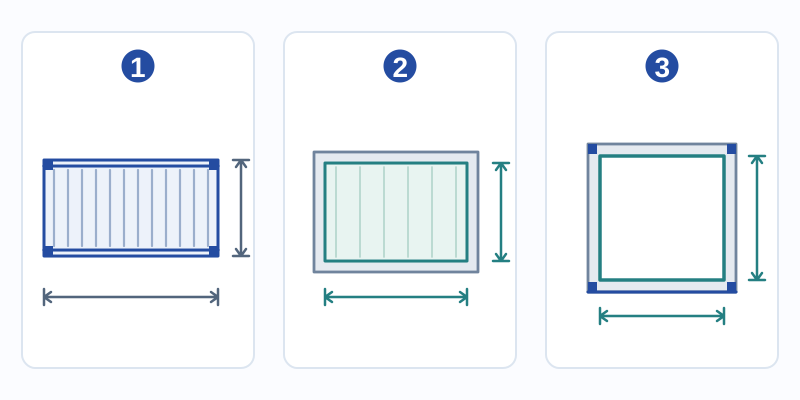
Visual reference
- External dimensions
- Internal space
- Door clearance
Illustrative diagram, not to scale.
To organize your belongings, use the interior measurements. In the example below, the floor offers about 13.9 m². Check the door separately: its opening is lower than the inside of the container. So be sure to ask for the exterior, interior and door measurements.
| Measurement | Example measurements | What they're for |
|---|---|---|
| Typical exterior dimensions | About 6.06 × 2.44 × 2.59 m | Placing it on your property |
| Interior dimensions of the example | 5.900 × 2.352 × 2.395 m | Storage plan |
| Door of this example | 2.340 m wide × 2.292 m high | Check the passage of objects and equipment for loading |
| Calculated internal floor area | About 13.9 m² | Interior length × interior width |
| Interior volume stated for this example | 33.2 m³ | Volume before allowing space for the storage layout and aisles |
Measure the bulkiest object and the door opening
Measure the object as it will be loaded, with its packaging, pallet, handles, feet, or casters. Compare its width and height to the door opening. Also allow space to move it. Even if it seems to fit just barely, you may not have room for the cart or lifting accessories.
Don't count on being able to tilt the object. It may need to stay upright, and tilting it requires space in front of the door. Tell the seller about this constraint when you ask. For a heavy machine, also check the floor and the loading method: the fact that it fits through the door doesn't prove the floor can support its weight.
Draw a storage plan, even for a small stock
List the items to store, their quantity, and how often you'll take them out. Put what you use often near the doors. The back can hold things you rarely take out, while keeping access to check them. If you install shelves, allow space to open bins and work in front.
Draw your storage using the confirmed interior measurements, rather than a 6.06 × 2.44 m rectangle. Add the reinforcements, accessories, and equipment that take up space. A scale plan lets you see if an aisle will be blocked or if a device can still be taken out once the other items are stored.
Why 33.2 m³ doesn't mean 33.2 m³ of goods
The advertised volume is the empty interior space. Your boxes won't necessarily fill the entire length, width, and height. There will be gaps between items, protective materials, and access paths. Also check what you can lay down, turn over, or stack, and up to what height.
You can start by calculating the volume of each package: length × width × height, multiplied by the quantity. This helps compare formats, but then you need to draw the storage layout. If you often take things out, plan easy-to-reach spots first. For heavy items, check their weight separately and how it will be distributed on the floor.
Do you need more height or different doors?
If the interior height or the door height is too tight, look at High Cube models. The catalog offers 20-foot High Cube containers. Check their exterior dimensions, then ask for the interior measurements and door opening. More height doesn't necessarily give you more floor space and doesn't solve every loading difficulty.
Doors at both ends can make it easier to access your stock. A side opening lets you reach items from the side. Compare the openings, the space needed for the doors, and your planned storage before choosing. If you're thinking of cutting a wall later, first have the consequences for the container's structure checked.
Check the space around the container and truck access
Draw the container in its final spot, with its doors open and the obstacles around it. Keep room to move your things. Also measure the site entrance, narrow passages, and turns. Look for overhead obstacles. Just because the container fits in its spot doesn't mean the truck can get to it.
To request a quote, send a sketch with measurements and photos of the route to the spot. Specify the type of ground, the slope, the planned supports, and the unloading equipment available. The carrier must confirm the vehicle and unloading method; the supports must also suit the ground. There's no single clearance to plan for all deliveries.
Measurements to prepare before buying a 20-foot
- Dimensions of the widest, tallest, and longest object, including packaging and pallet.
- The interior measurements and door opening of the container offered.
- A storage plan with aisles and the items you'll take out often.
- The weight of the items and the equipment planned to load them, to check separately from volume.
- A sketch of the site with the doors and obstacles around.
- Delivery address, actual access to the site, photos and desired date.
See matching models
Containers to compare
Models in stock, with indicative prices excluding tax, transport and unloading. The images show the models: ask for recent photos of the container you are buying.
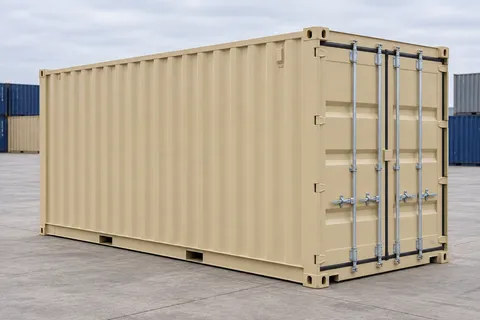
CA-20-STANDARD-NEW-BEIGE
Container 20 ft Standard · New · one trip · Beige
New · one trip / Beige
$4,428 Indicative, excl. tax
Request an offer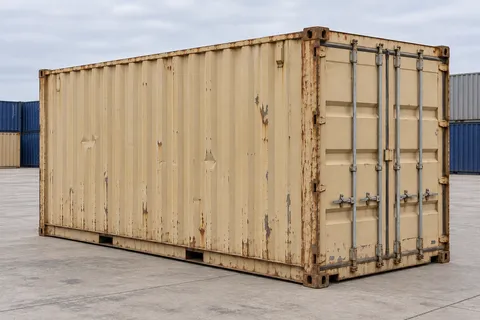
CA-20-STANDARD-C-BEIGE
Container 20 ft Standard · Used · last trip · Beige
Used · last trip / Beige
$1,640 Indicative, excl. tax
Request an offer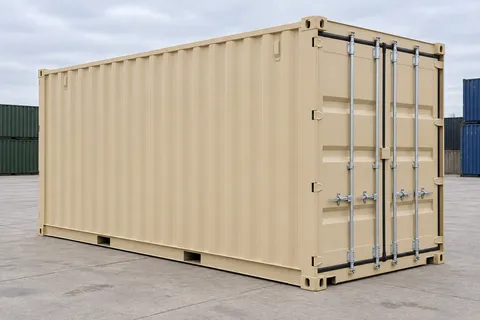
CA-20-HIGH-CUBE-NEW-BEIGE
Container 20 ft High Cube · New · one trip · Beige
New · one trip / Beige
$5,760.5 Indicative, excl. tax
Request an offer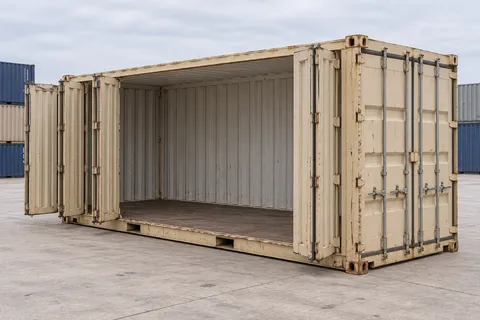
CA-20-OPEN-SIDE-B-BEIGE
Container 20 ft Open Side · Used · good condition · Beige
Used · good condition / Beige
$5,330 Indicative, excl. tax
Request an offer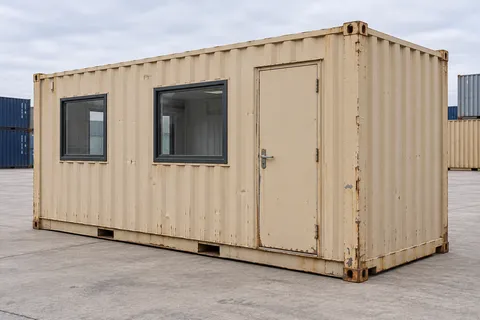
CA-20-OFFICE-B-BEIGE
Container 20 ft Office · Used · good condition · Beige
Used · good condition / Beige
$12,915 Indicative, excl. tax
Request an offer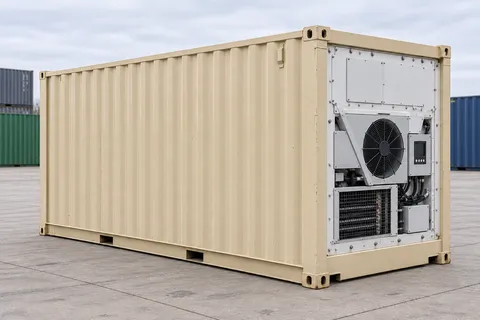
CA-20-REEFER-A-BEIGE
Container 20 ft Refrigerated · Used · excellent condition · Beige
Used · excellent condition / Beige
$13,755.5 Indicative, excl. tax
Request an offerFrequently asked questions
What is the internal floor area of a 20-foot container?
In this standard example, the interior dimensions of 5.900 × 2.352 m give about 13.9 m² of floor space. Outside, the container takes up about 14.8 m² of ground. Check the measurements of the container you're offered and the space taken up by any fittings.
Can you rely solely on the advertised 33.2 m³?
No. You need to consider the shape of the objects, the packaging, stacking and the passages to get your things out. Also check that the objects fit through the door, then draw the storage layout.
Are the dimensions of a 20-foot reefer identical to those of the standard?
Not necessarily. The insulation, refrigeration unit and equipment take up space. Ask for the interior measurements and door opening of the reefer container you're thinking of buying.