Catalogue prices in NZD
Container prices exclude tax, transport and unloading. The supplier’s proposal details these separately.
View models and prices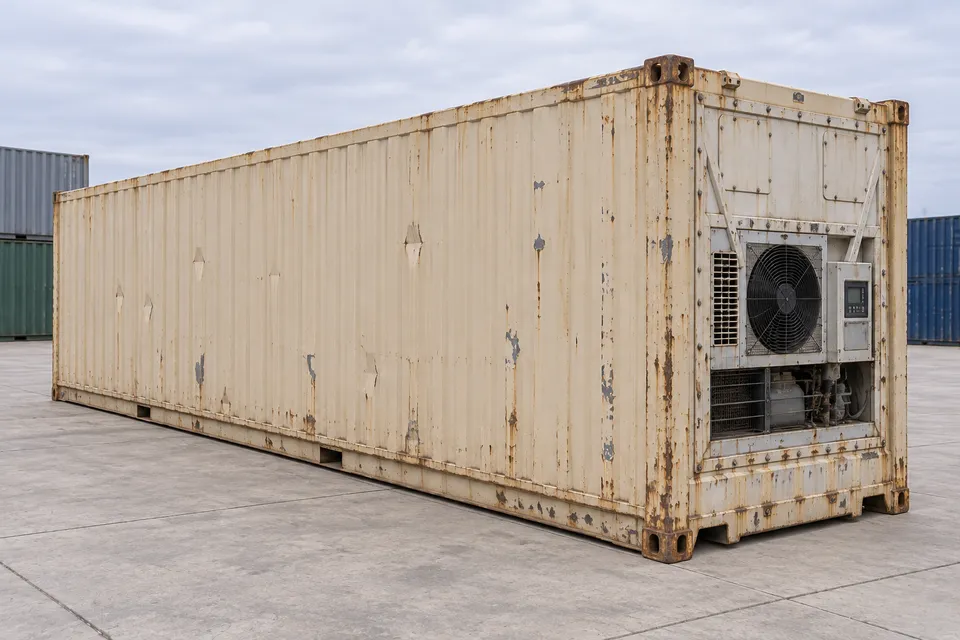
A closer look at this condition
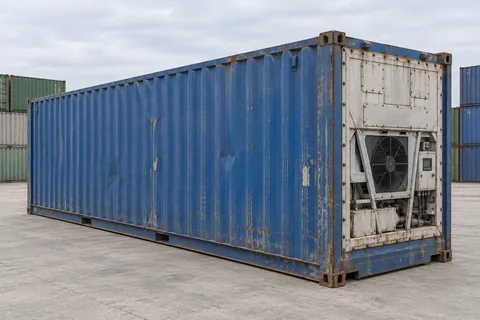
Used, last trip: more pronounced wear. Assess any repairs needed before choosing.
Understanding conditionExternal and internal dimensions, openings and price in a sheet you can keep.
Product details / New Zealand
In stockReferenceCA-40-REEFER-C-BEIGE
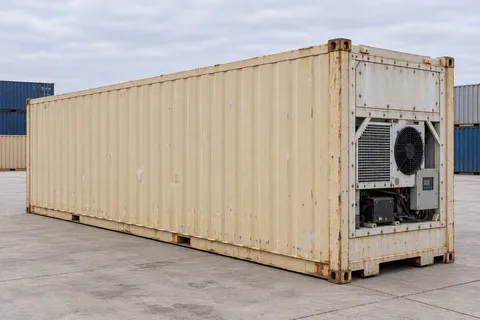
This 40-foot Refrigerated container is available in beige, in "Used · last trip" condition. This model is in stock. Its catalogue reference is CA-40-REEFER-C-BEIGE. The refrigerated container lets you store products at a controlled temperature. The choice depends on the goods, the available power supply, and the refrigeration unit. Delivery — New Zealand. The price in NZD is for the container. Transport to your site must be quoted separately. Distinguish where the truck can stop from the container’s final position.
Container price
$24,395excl. tax / unit
Unit price excluding tax. Transport and unloading quoted separately.
No obligation · sent to suppliers through Quotbox
Selected configurationUsed · last trip · Beige
A 40-foot refrigerated container lets you spread batches over a greater length. Draw a loading plan that avoids unnecessary handling and lets air circulate to the back. Check the insulation, refrigeration unit and electrical requirements. Ask for a test. The insulation and the space needed for airflow leave less room for goods. Its external dimensions are 12.192 × 2.438 × 2.591 m (length × width × height). Check the measurements of the container you are buying, especially if you need to fit a bulky item inside.
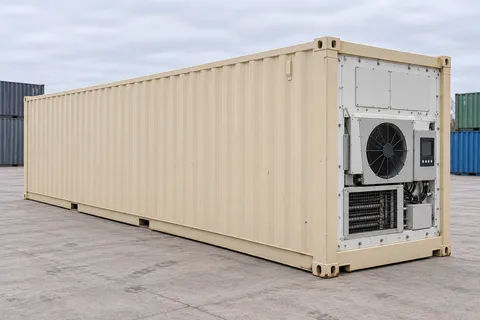
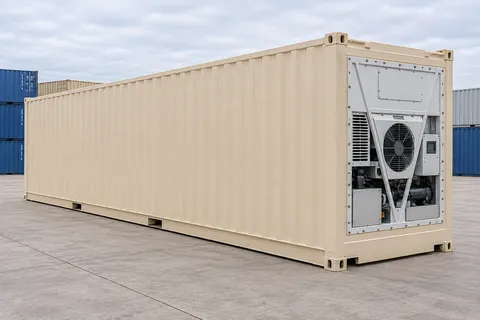
A container sold as 'last trip' has finished its sea transport service. Check its history and any repairs needed before using it. If you want to ship it by sea again, have its suitability and the required documents checked. This model is shown in beige. Ask for photos to see its current colour and any paint repairs. Ask which equipment is included in the quote. The catalogue images show the model: ask for recent photos of the container you will buy.
The displayed price covers the container, excluding tax. Transport and unloading are quoted separately.
The supplier quotes delivery based on the destination, truck access and unloading equipment.
The displayed container price excludes transport, unloading, and taxes. The supplier will itemise these costs and confirm the complete amount before you commit.
Describe manoeuvring space, the ground and any obstacles near the placement area.
Plan access and placement together. These three views help you describe your site to the supplier.
A truck-mounted crane can place the container from a suitable working area. The supplier confirms the vehicle, lifting reach and space needed for its stabilisers.
Provide gate width, bends, slopes and obstacles. The access route must suit the selected truck, all the way to its unloading area.
Prepare a stable, level position. Leave space in front of the doors for their swing and for handling goods; the supplier confirms suitable supports.
Unsure about unloading? Describe access and placement, adding photos where possible. The supplier proposes a solution and states its cost.
Illustrative diagrams, not to scale. The supplier confirms vehicle dimensions, distances and unloading method for your site.
YOUR DESTINATION
Delivery — New Zealand. This guide also helps you prepare the site and the truck's arrival. If the land is away from the stated street, add directions to the entrance and a landmark. Distinguish where the truck can stop from the container’s final position.
Container prices exclude tax, transport and unloading. The supplier’s proposal details these separately.
View models and pricesProvide the full postcode, town and physical placement address, even if the site does not yet have a street number.
Describe gate width, manoeuvring space, ground conditions and overhead cables or branches. Say whether you have lifting equipment or need a crane truck.
Prepare for deliveryDelivery feasibility, vehicle, unloading and timing are confirmed for the supplied address. Selecting a country does not confirm local availability.
01 / Specifications
Dimensioned drawing · external dimensions
Side viewLength
End viewWidth / Height
Length 12.192 m · Width 2.438 m · Height 2.591 m
Cargo-door clearance (Width × Height)2.290 m × 2.260 m
Schematic drawing of the external envelope. Typical catalogue dimensions; equipment and openings vary by reference and manufacturer.
Typical dimensions for this model. Small variations are possible between manufacturers.
40′ / Refrigerated
Container 40 ft Refrigerated · Used · last trip · Beige. Check that this container suits what you want to store and the access to your site. Ask which equipment is included in the quote.
The refrigeration unit needs a suitable electrical supply. A picture does not prove it works: ask for a test. Keep a passage to access the back and make sure the truck can deliver a container of this length.
To compare other configurations in the same format, see the catalogue’s 40-foot containers.
Plan power, airflow and access to the refrigeration unit for checks. Provide the town, street and site or building number, or a precise landmark if the land has no number.
Ask for the refrigeration unit model and a test. Have it checked to make sure it suits your products and the available electrical supply. To prepare these choices, use the delivery preparation guide.
For a last-trip container, ask about planned repairs and have the structure checked. If you want to transport it again, have its compliance checked separately. Follow the steps in the used-container inspection guide.
Ask for the container number, recent photos, and a quote that specifies the included equipment and planned repairs.
Dimensions, access, storage and delivery: practical answers for your project.
This 40-foot model offers about 59.3 m³ in an insulated enclosure for temperature-controlled storage with a suitable refrigeration unit. The unit requires an external electrical supply; the container does not generate cooling on its own. Your set point, goods and frequency of door opening determine the configuration you need.
The typical door opening is 2.290 × 2.260 m (width × height). Insulation, the refrigeration unit and the air-distribution floor reduce usable space compared with a dry container of the same size. Keep air passages and the maximum load line clear: you cannot fill the entire geometric volume with goods.
Outside (length × width × height): 12.192 × 2.438 × 2.591 m, occupying about 29.7 m². Typical inside dimensions (length × width × height): 11.560 × 2.280 × 2.250 m, with about 26.4 m² of floor area and 59.3 m³. The door opening is 2.290 × 2.260 m (width × height), separate from the internal dimensions. These are model reference dimensions; manufacturing and equipment can cause small differences.
Last trip describes a container sold at the end of its shipping service, not automatically one in poor condition. Wear and repairs depend on the unit: examine its doors, floor and seals in recent photographs. For further transport, unit suitability and CSC plate validity must be assessed separately from this description.
Cooling depends on airflow around the goods, not only the temperature set point. Keep floor air channels clear and respect the load limit marked inside the unit. Products need to enter at a temperature compatible with the intended storage; frequent door opening and power interruptions alter internal conditions. Include electrical supply and temperature monitoring in your site arrangements.
This configuration costs $24,395 excluding tax for one container. Transport, unloading and any fit-out are quoted separately for your request. Currency and price follow the selected country; the proposal sets out applicable taxes and the complete amount.
The container occupies about 29.7 m², with an external base of 12.192 × 2.438 m. That area excludes door swing and space for the truck and handling equipment. Prepare a stable, level location and provide the postcode or area, narrow passages, turns, slopes, obstacles and available unloading equipment. These details support transport pricing and selection of a suitable vehicle. Provide the town, street and site or building number, or a precise landmark if the land has no number. Postal code: 4 digits. Format example: 1010. Use your site’s code, not this example. If the land is away from the stated street, add directions to the entrance and a landmark. Distinguish where the truck can stop from the container’s final position. The proposal should confirm transport, unloading, availability and timing for this site.
Your selection and delivery details are sent through Quotbox to contact suppliers. They are used to propose a unit and detail the container, taxes, transport and unloading. You can compare that proposal and refine your project before accepting it. The form is a no-obligation enquiry with no automatic purchase or payment.
$24,395excl. tax / unit