A standard 40-foot container is about 12.19 m long, 2.44 m wide, and 2.59 m high on the outside. The High Cube is similar in length and width, but stands about 2.90 m tall. To know what you can fit inside, also check the interior, the door, and the path your items will take to get in.
The catalogue table shows the measurements of the models we offer. The examples below also give interior measurements to help you plan. Have them confirmed on the container you will buy: the manufacturer, repairs, insulation, refrigeration unit, or office fit-out can change the available space. See the dimensions of this model: Container 40 ft Standard · Used · last trip · Beige.
External catalogue dimensions
| Size and type | External length | External width | External height | External footprint |
|---|---|---|---|---|
| 40′ Standard | 12.192 m | 2.438 m | 2.591 m | 29.72 m² |
| 40′ High Cube | 12.192 m | 2.438 m | 2.896 m | 29.72 m² |
These external dimensions are for reference. Check the container's measurements before buying. The external footprint is length × width, without the space needed to open the doors or manoeuvre. This calculation does not give the storage space inside.
Standard and High Cube: same length, different height
In these examples, the standard and High Cube both have an interior length of 12.032 m. The standard is 2.395 m high inside, while the High Cube is 2.700 m. The volume goes from 67.7 to 76.3 m³. The extra 8.6 m³ comes from the height. It does not give you more floor space for another row of pallets.
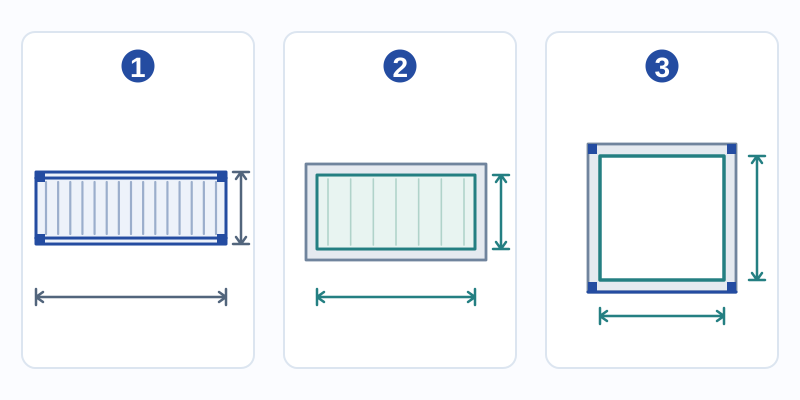
Visual reference
- External dimensions
- Internal space
- Door clearance
Illustrative diagram, not to scale.
The door also changes. In these examples, it is 2.340 m wide in both models, but its height goes from 2.292 to 2.597 m. For a machine or a package that must stay upright, this can make the difference. Measure the ceiling height and the door height before you choose.
| Measurement | 40-foot standard | 40-foot High Cube |
|---|---|---|
| Interior length | 12.032 m | 12.032 m |
| Interior width | 2.352 m | 2.350 m |
| Interior height | 2.395 m | 2.700 m |
| Door: width × height | 2.340 × 2.292 m | 2.340 × 2.597 m |
| Interior volume stated for this example | 67.7 m³ | 76.3 m³ |
External footprint: 29.7 m²; internal floor area: about 28.3 m²
To reserve space on your land, multiply the outside length by the width: that gives about 29.7 m². Inside the standard example, the measurements of 12.032 × 2.352 m give about 28.3 m² of floor. So use the outside measurements for your land and the inside measurements for storing your things.
If you fit out the container, linings, partitions, ventilation and equipment will take up more space. Ask for a plan with measurements after the work, including passages and doors. A High Cube height alone is not enough to guarantee comfort or compliance for an office.
Check how to get long objects in and out
An object shorter than the container's interior doesn't necessarily go in easily. You also need to look at its width, its supports and the space in front of the door. Will you have to carry it, roll it, use a trolley or lift it? Will you need to turn it? Check the whole path, not just where it will sit.
Also think about getting it out once the other things are stored. A long piece must not block access to the rest of the stock. Doors at both ends or an opening on the side can help. However, ask for the exact measurements of the openings on the container you choose.
Calculate space for your belongings, not just volume
Start by listing your belongings. A number of pallets or a comparison with the size of a house isn't enough to plan storage. Packaging and the dimensions of supports change the space needed. Stackable boxes don't store the same way as machines, fragile furniture, or items you take out every day.
Take a box measuring 0.60 × 0.40 × 0.40 m: its volume is 0.096 m³. Dividing 67.7 by this volume gives about 705 boxes. That's a theoretical calculation, not a guaranteed number. You need to check rows, levels, wasted space, the strength of stacked boxes, and access. Use this calculation to compare formats, then sketch a possible layout.
Draw pallets and shelving with their access ways
Measure the pallet with its full load, including any boxes that stick out. Check which way it can go in and how the forklift will pass through the door. The number of pallets depends on their arrangement and the container's dimensions. There's no single total that works for all 40-foot containers and all loads.
For shelving, draw each row, its depth, and the space needed to use it. Over a length of about twelve metres, keep the aisles clear: a blocked aisle can make part of your stock inaccessible. Also check the total weight and heavy loads concentrated on a small area of the floor. The available square metres don't tell you what the floor can support.
Allow space for the container and the truck
Draw the container on your site with the doors open, the access ways, and any obstacles. Check the truck's route: turns, slope, available width, cables, and branches. Also allow space for unloading. The spot may be big enough for the container but not for the truck to work.
Send the carrier a sketch with measurements and photos of the whole route. Specify the ground, the planned supports, the final position, and the unloading equipment available. They can confirm how to deliver and place the container. If you're unsure between 20 and 40 feet, ask for quotes for the same stock and the same address. Compare the usable storage space and the total delivered price.
Information to prepare for a 40-foot container
- The model you're considering: standard or High Cube.
- The interior and door measurements, along with any equipment or modifications present.
- The dimensions and weight of the large items, noting which ones must stay upright.
- A plan of the pallets or shelving with access to the items you take out often.
- The plan after work if you add linings or partitions.
- A sketch of the site, with the doors open, obstacles, and the truck's route.
- Destination, photos of the entrance and where it will sit, desired date, and unloading to be confirmed.
See matching models
Containers to compare
Models in stock, with indicative prices excluding tax, transport and unloading. The images show the models: ask for recent photos of the container you are buying.
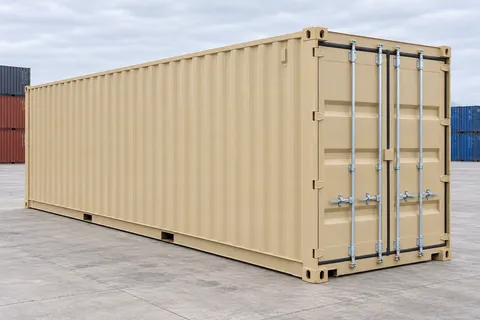
CA-40-STANDARD-NEW-BEIGE
Container 40 ft Standard · New · one trip · Beige
New · one trip / Beige
$4,428 Indicative, excl. tax
Request an offer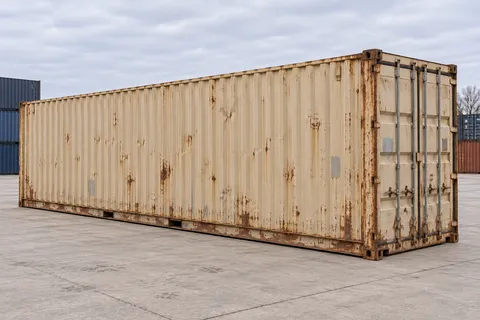
CA-40-STANDARD-C-BEIGE
Container 40 ft Standard · Used · last trip · Beige
Used · last trip / Beige
$2,296 Indicative, excl. tax
Request an offer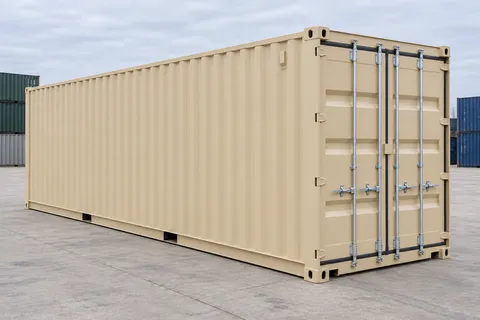
CA-40-HIGH-CUBE-NEW-BEIGE
Container 40 ft High Cube · New · one trip · Beige
New · one trip / Beige
$5,084 Indicative, excl. tax
Request an offer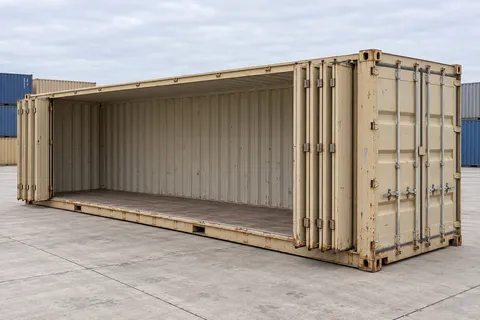
CA-40-OPEN-SIDE-B-BEIGE
Container 40 ft Open Side · Used · good condition · Beige
Used · good condition / Beige
$8,897 Indicative, excl. tax
Request an offer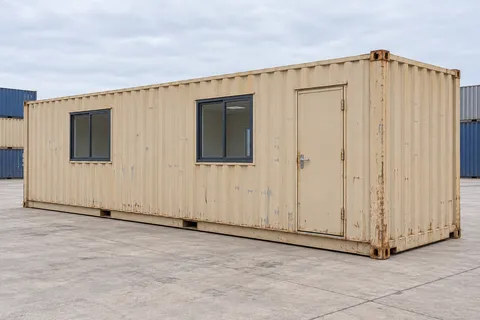
CA-40-OFFICE-B-BEIGE
Container 40 ft Office · Used · good condition · Beige
Used · good condition / Beige
$20,090 Indicative, excl. tax
Request an offer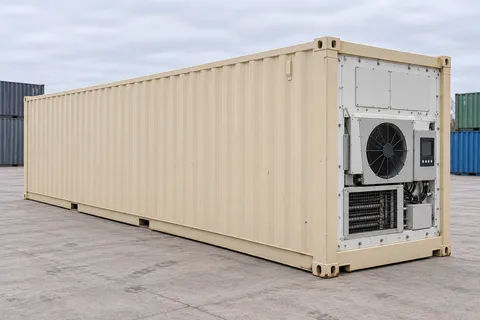
CA-40-REEFER-A-BEIGE
Container 40 ft Refrigerated · Used · excellent condition · Beige
Used · excellent condition / Beige
$21,012.5 Indicative, excl. tax
Request an offerFrequently asked questions
What is the volume difference between a 40-foot standard and High Cube?
In the examples shown, the standard offers 67.7 m³ and the High Cube 76.3 m³, about 8.6 m³ more. The space you can actually use also depends on the container, the objects, and how you arrange them.
Does a 40-foot container have 30 m² of internal floor area?
The container takes up about 29.7 m² of ground outside. In the standard example, the interior measurements of 12.032 × 2.352 m give about 28.3 m² of floor before any fit-out. You need to distinguish these two areas.
How many pallets fit in a 40-foot container?
It depends on the dimensions of the loaded pallets, how you orient them, the container's interior, and the equipment used for loading. Draw the loading plan rather than relying on a number that's claimed to work in every case.