A 20-foot container may be enough if your belongings fit in a space about six meters long, with room to move around. Look at a 40-foot if you need more length or can't organize your stock properly in a 20-foot. In either case, confirm site access and the total delivered price.
A standard 40-foot offers about twice the volume of a standard 20-foot. But a big space doesn't always replace two separate small containers. Think about the length of your items, who will use the storage, frequent access, and the height you need. Choose the space you can actually use, not just the most cubic meters. A model to compare: Container 20 ft Standard · Used · last trip · Beige.
External catalogue dimensions
| Size and type | External length | External width | External height | External footprint |
|---|---|---|---|---|
| 20′ Standard | 6.058 m | 2.438 m | 2.591 m | 14.77 m² |
| 20′ High Cube | 6.058 m | 2.438 m | 2.896 m | 14.77 m² |
| 40′ Standard | 12.192 m | 2.438 m | 2.591 m | 29.72 m² |
| 40′ High Cube | 12.192 m | 2.438 m | 2.896 m | 29.72 m² |
These external dimensions are for reference. Check the container's measurements before buying. The external footprint is length × width, without the space needed to open the doors or manoeuvre. This calculation does not give the storage space inside.
Indicative prices excluding tax — 20 feet
These ranges correspond to the models in stock in the selected country. Taxes, transport and unloading are added to the displayed price. Click on an amount to see the cheapest model in the category. Ask for a quote to get the final price.
Indicative prices excluding tax — 40 feet
These ranges correspond to the models in stock in the selected country. Taxes, transport and unloading are added to the displayed price. Click on an amount to see the cheapest model in the category. Ask for a quote to get the final price.
Check the available space inside and the doors
The catalog table shows the external dimensions and prices of the models offered. To plan your storage, also ask for the internal measurements and door opening of the container you'll buy. The figures below are examples of standard models: they help you compare, but don't guarantee the measurements of every container.
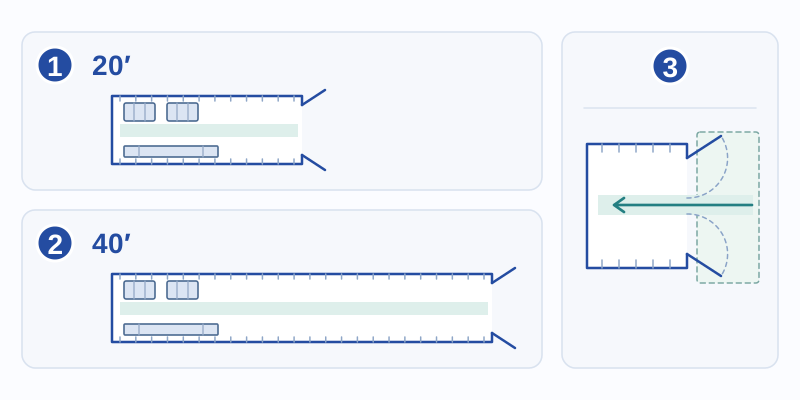
Visual reference
- 20′
- 40′
- Access and handling
Illustrative diagram, not to scale.
Both sizes have a similar width. The 40-foot mainly adds length, not double the room to move side by side. The choice between standard and High Cube is about height. A longer container doesn't solve a problem of a low door or lack of height inside.
| Criterion | 20-foot | 40-foot |
|---|---|---|
| Usual external length | About 6.06 m | About 12.19 m |
| Usual external width | About 2.44 m | About 2.44 m |
| Internal length of the example | 5.900 m | 12.032 m |
| Calculated interior surface | About 13.9 m² | About 28.3 m² |
| Volume indicated in the example | 33.2 m³ | 67.7 m³ |
| Organization | A shorter space | A longer continuous space |
List your belongings and the ones you'll take out often
Note the dimensions, weight, and quantity of the items, then how often you'll take them out. Identify what stacks, what must stay on the floor or upright, and items too long for a 20-foot. Also measure packaging, supports, and anything sticking out: all of that takes up space.
Then draw the rows and the aisle for moving equipment. A stock that stays in place for several months isn't stored the same way as items you take out every day. Don't assume the same fill percentage applies to every load: the space you need depends on your items, what you can stack, and the access you need to keep.
Which size fits these three situations?
For a team's tools, start by sketching the shelves and walkways in a 20-foot. Check that rolling equipment fits through and that everyday tools stay easy to reach. If the stock doesn't fit or needs a longer space without a divider, look at a 40-foot. The site also has to allow delivery and placement.
Eight-meter parts that must stay in one piece won't fit in the roughly 5.90 m inside a standard 20-foot. A 40-foot can be a solution. Still check the door, the loading route, and the supports under the items. You also need to check the loading equipment and the weight the floor can carry.
For two teams on different sites, two 20-foot containers can be more practical than one 40-foot. Each team will have its stock on site, even if the big container seems cheaper per square meter. Ask for quotes with delivery and placement at the actual planned locations.
One 40-foot or two 20-foot: one space or two separate storage areas?
A 40-foot gives you one space with no divider. Two 20-foot containers give you two storage areas, each with its own doors and shelving. Adding up the volumes doesn't create one big room: items must fit and stay inside each container. This separation can be handy for several teams or activities.
Two small spots don't necessarily replace the space for a 40-foot. On site, also keep room to open the doors, move around, and unload. Check that the containers won't block an access route, a walkway, or equipment you'll need later.
| Need | Solution to look at first | What to check |
|---|---|---|
| Very long, indivisible object | One 40-foot | Door, loading route, and equipment to move the object |
| Two independent activities or sites | Two 20-foot | Locations and delivery at both sites |
| Items you need to take out regularly | Storage that keeps your things accessible | Aisles and item placement |
| Items that are too tall | Standard or High Cube | Interior height and door clearance |
| Limited space on your property | Several layout options | Vehicle, obstacles, and unloading |
Compare prices for equivalent type, condition, and services
Compare prices for containers of the same type and condition. Between a new 20-foot and a used 40-foot, length isn't the only difference. Also look at the appearance, doors, and equipment you need. The prices shown are indicative and exclude taxes, with transport and unloading extra.
Ask for the total for each option: containers, transport, unloading, options, work, and taxes. Have the number of trips and how they're organized confirmed. Two containers do not necessarily mean two identical delivery trips. If a price is missing, ask for it before deciding that one option is cheaper.
Don't confuse volume, weight, and height
A 40-foot offers more volume, but it can't necessarily carry double the load of a 20-foot. For heavy materials or machinery, check the weight and how it will be distributed. Have the limits of the container, transport, and lifting equipment confirmed by the relevant professionals. The number of cubic meters doesn't tell you these limits.
A High Cube gives you extra height. Doors on the side or at both ends make certain access easier. For an office or a refrigerated unit, also look at the equipment and layout. So choose the length, height, doors, and condition according to your needs: size alone doesn't answer every question.
Six questions to ask yourself before choosing
- Will my belongings and walkways fit inside a 20-foot container?
- Do I need one large open space or two separate storage areas?
- Will my largest item fit through the door, and can I load it with the equipment I have?
- Do I need the extra height of a High Cube or different doors?
- Can the truck get to the site and unload at each spot?
- Do the quotes include comparable models and all delivery costs?
See matching models
Containers to compare
Models in stock, with indicative prices excluding tax, transport and unloading. The images show the models: ask for recent photos of the container you are buying.
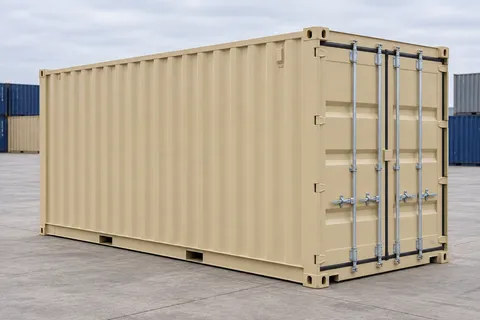
CA-20-STANDARD-NEW-BEIGE
Container 20 ft Standard · New · one trip · Beige
New · one trip / Beige
$3,075 Indicative, excl. tax
Request an offer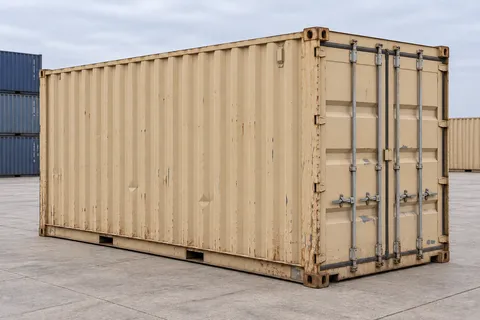
CA-20-STANDARD-B-BEIGE
Container 20 ft Standard · Used · good condition · Beige
Used · good condition / Beige
$2,398.5 Indicative, excl. tax
Request an offer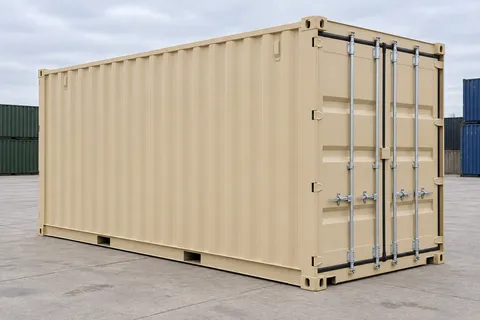
CA-20-HIGH-CUBE-NEW-BEIGE
Container 20 ft High Cube · New · one trip · Beige
New · one trip / Beige
$3,997.5 Indicative, excl. tax
Request an offer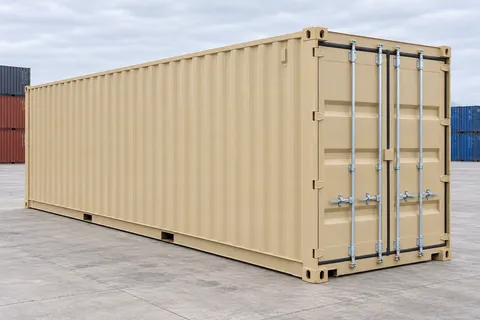
CA-40-STANDARD-NEW-BEIGE
Container 40 ft Standard · New · one trip · Beige
New · one trip / Beige
$4,428 Indicative, excl. tax
Request an offer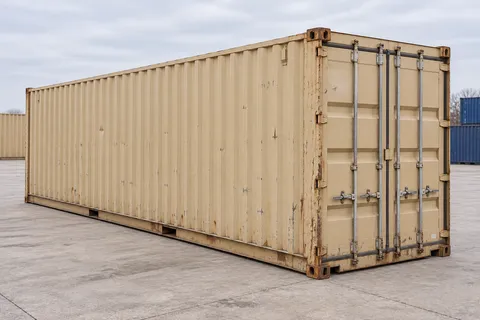
CA-40-STANDARD-B-BEIGE
Container 40 ft Standard · Used · good condition · Beige
Used · good condition / Beige
$2,870 Indicative, excl. tax
Request an offer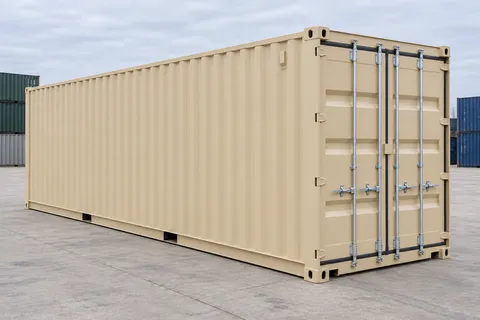
CA-40-HIGH-CUBE-NEW-BEIGE
Container 40 ft High Cube · New · one trip · Beige
New · one trip / Beige
$5,084 Indicative, excl. tax
Request an offerFrequently asked questions
Does a 40-foot container replace two 20-foot containers?
In the examples shown, the large size gives you about twice the volume of a standard 20-foot container, but in one single space. Two 20-foot containers give you two separate storage areas. Compare what you need to store, how you'll access it, and the delivered price to decide what works for you.
Is a 20-foot container always easier to deliver?
It's shorter, but that alone doesn't guarantee delivery. The truck, unloading, turns, and ground conditions matter too. Have the carrier check the access and final spot.
Can I get a quote for both options?
Yes. Give the same list of items and the same address. Ask for a quote for one 40-foot container and another for two 20-foot containers, including transport, unloading, options, and taxes.