Choose a side-opening container based on what you need to put inside and the access you need. An opening on the long side can make it easier to get a bulky item in or reach your stock. But the container's outside length doesn't tell you the actual width of the opening.
Before comparing 20-foot and 40-foot sizes, map out the full path your goods and handling equipment will take. Check the openings, how much space the open doors take up, the ground, and the limits of the container you're considering. This will help you make a precise request. A model to compare: Container 20 ft Double Door · Used · last trip · Beige.
Explain why you need side access
What problem are you trying to solve? Getting in a machine too wide for the end door, taking out an item without moving the others, reaching several areas from outside, or loading pallets from the side? Depending on your answer, the model and where you place it may differ.
Note which products go in and out, in what order, and with what equipment. Distinguish the first loading from the daily movements. A side door can be useful at first, but then become inaccessible if you put a fence or equipment in front of it. Keep the path you need clear once everything is set up.
Compare Standard, Double Door, Open Side, and Open Top
A standard container usually loads from one end. A Double Door has an opening at each end: you can spread out your stock without reaching everything through the same door. An Open Side gives you access on the long side, and how wide it is depends on how it's built. An Open Top loads from above and needs a different handling method.
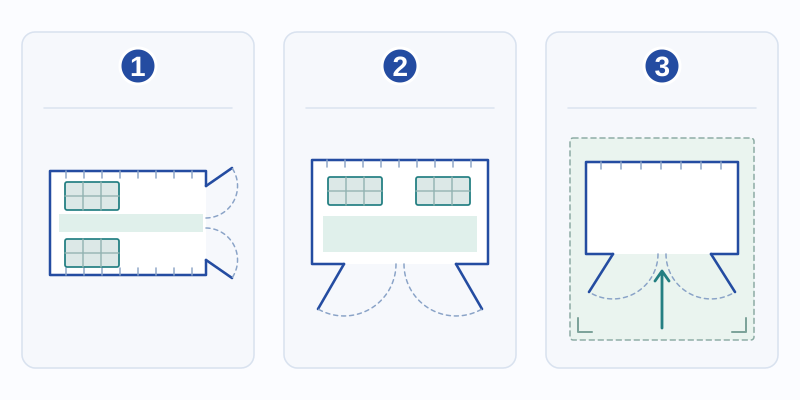
Visual reference
- End access
- Illustrated side access
- Clearance and approach
Illustrative diagram, not to scale.
Don't just go by the sales name. Ask which doors are actually there, which parts stay fixed, and how they open. Similar names can mean different models. Check the actual clear space when the doors are open, rather than relying only on the words Open Side or Double Door.
| Type of opening | Main question | Space to keep clear on the plan |
|---|---|---|
| Standard | Do goods go through one end and stay accessible? | In front of the door and all the way to the back |
| Double Door | Does access from both ends make storage easier? | In front of both short sides |
| Side opening | Does the side allow the passage and positioning you need? | Along the opening side and in the maneuvering area |
| Open Top | Does the load need to come in from above? | Lifting zone and operations suited to top loading |
Ask for the clear width and height with the doors open
Ask for a drawing of the container you're being offered, showing the clear width and height, any posts, the threshold, and how much space the open doors take up. If the opening is split into several parts, ask which ones can be used at the same time and which parts have to stay in place. A 40-foot container doesn't necessarily have a continuous opening along its whole length.
Measure the item ready to be moved, including packaging, pallet, accessories, forks, or any lifting device. Check every passage from the gate to the container. Send the plan with measurements to the supplier and keep it with your correspondence. It's better to find out about a space problem before transport than on delivery day.
- Clear width and height of the opening actually used.
- Fixed posts, threshold, handles, and obstacles on the route.
- Position of open doors and space needed to operate them.
- Dimensions and weight of the item with its handling device.
Leave room for the doors and for maneuvering
Draw the container in its final spot, along with the walls, fences, shelving, and traffic lanes around it. Add the open doors, the loaded machine, and the walkways for people. A side that looks clear in a photo may be unusable if the ground slopes, if something blocks the approach, or if the doors take up the whole work area.
Specify how often it will be used and the site conditions. The handling manager must check that the route works for the planned equipment. Ask how to open the doors and keep them in place on this model. There is no one-size-fits-all clearance around a container that works for every mechanism, machine, and load.
Check whether a forklift can enter the container
Payload is the maximum weight of the contents under the container's intended conditions. It does not prove that a forklift can enter or that the floor will support the concentrated load under its wheels. Have the loaded forklift's weight, the areas where its wheels bear on the floor, the threshold, the floor, and the container's stated limits checked. The technical documents for the example clearly distinguish total weight from how the forces are distributed.
If the machine stays outside, still check how the goods will be set down and then moved inside. If you want to bring the machine in, first get approval from the supplier and the handling manager for this equipment and this container. An improvised test or a general load capacity is not enough to verify the route.
Inspect the doors, locking mechanisms and floor
For a new or used container, ask for photos of the opening mechanism, seals, thresholds, and floor. Have any planned repairs and included equipment spelled out. For a used one, also ask for a closing demonstration. Check which container is shown and what work will be done before delivery.
The ground, supports, and installation must allow the doors to work normally. Have them checked, then test the openings and closings at delivery. If you plan to cut openings or make other changes, say so from the start. Have their feasibility and effects on the structure of the chosen container checked: not every wall can be modified without a technical assessment.
Choose the size and compare the full budget
Compare 20-foot and 40-foot side-opening models using the same loading route. The longer one offers more storage spots, but you also need to be able to place it and have it delivered to your site. In addition to size and condition, have the offer specify the opening dimensions, equipment, passage measurements, and requested checks.
Catalog prices are indicative and exclude tax, transport, and unloading. Ask separately for the price of delivery, installation, and any equipment you need. Include your plan and the dimensions of the goods so the supplier can confirm the proposed model. Also check the weight and delivery guides to prepare for moving and site preparation.
The plan to send with your request
- Intended use and frequency of goods movements.
- Dimensions, weight, and packaging of the items with their supports.
- Clear opening, posts, threshold, and door position to confirm.
- Equipment route, floor limits, and handling method to validate.
- Final location, obstacles, ground, truck access, and unloading equipment.
- Photos of the container, repairs, included equipment, and checks at delivery.
Explore suitable models
Containers to compare
Container price excluding tax. Delivery and unloading costs depend on your postal code and access. Ask the supplier to confirm the included equipment and the container's performance in the quote.
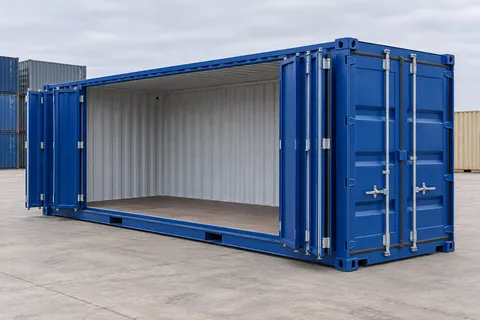
CA-20-OPEN-SIDE-NEW-BLUE
Container 20 ft Open Side · New · one trip · Blue
New · one trip / Blue
$8,159Excluding tax
Request an offer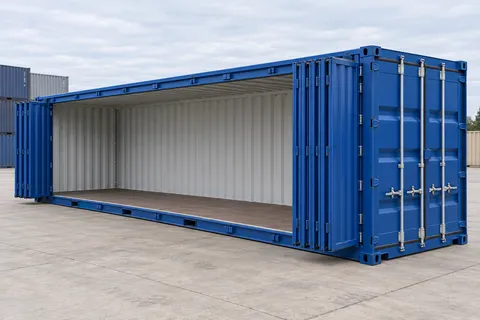
CA-40-OPEN-SIDE-NEW-BLUE
Container 40 ft Open Side · New · one trip · Blue
New · one trip / Blue
$12,402.5Excluding tax
Request an offer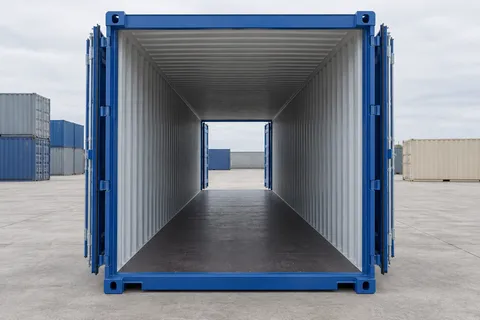
CA-40-DOUBLE-DOOR-NEW-BLUE
Container 40 ft Double Door · New · one trip · Blue
New · one trip / Blue
$6,642Excluding tax
Request an offerPractical questions
Is the entire length of an Open Side always open?
No, it depends on the model. Ask for a plan with the passage measurements, posts, and opening doors. The outside length doesn't tell you the opening width.
Can a Double Door replace a side opening?
A Double Door opens at both ends, which can make storage easier. It doesn't add a door on the long side. Draw the route of the object and the equipment to see if either solution works.
Can a forklift enter an Open Side container?
Have it checked for the loaded forklift and the container you're considering: passage, threshold, weight, supports, and floor strength. Get confirmation before planning for it to enter.
How much space should be left in front of the side doors?
It depends on the model. Draw the open doors, the space to maneuver them, the loaded equipment, and the passages to keep clear. Use the container drawing and a site assessment to confirm the clearance required.