Before buying a used container, check the doors, the floor, and the overall condition of the container body. A scratch is not as serious as a hole or a door that doesn't close properly. Also think about what you'll store inside: construction tools, furniture, or moisture-sensitive goods all require different checks.
Start by making sure the photos and documents actually match the container you're buying. Then look at the outside, the doors, and the accessible interior, without taking any risks. Note any defects and questions to ask the seller. This first check helps you decide; if you have a technical doubt or a special need, call in a professional. A used container to inspect: Container 20 ft Standard · Used · last trip · Beige.
Prepare the points to check
Make a list of what matters to you: a container that keeps out rain, doors that open easily, a floor in good condition, or certain equipment. Measure the items you need to store and the space they need to get through. Even a container in excellent condition won't be practical if your equipment can't fit through the door or gets stuck once inside.
Separate what's essential from what you can accept: faded paint might be fine, but a damaged floor under a heavy load is not. Also note any missing information. If you plan to drive a vehicle in, place a heavy load on a small area, or convert the container, ask for the necessary checks for that project. The maximum weight shown on a plate doesn't answer all these questions.
Check that the photos and documents match the right container
The catalog reference describes the model you chose. Also ask for the number of the actual container the seller is offering you. Photos of the sides, doors, and interior should show that same container. A nice picture on a product page doesn't tell you about the wear on the one that will be delivered to you.
Check that this number appears on the offer documents. Ask what repairs have been done, what equipment is included, and what inspections have taken place. If the container needs to go back into international transport, have its CSC plate and safety examinations checked. These documents don't prove the floor is clean or that a future office or living space meets regulations.
- A photo where the container number is readable.
- Recent photos of the sides, doors, and interior.
- A list of known defects and repairs.
- A list of included equipment and tests to plan.
- The inspection documents needed for what you intend to do with it.
Look at the outside without taking risks
From the ground and at a safe distance, check whether the container structure looks straight. Examine the corner posts, corners, walls, and any parts you can see safely. Look for major deformations, cracks, tears, and repairs. For each defect, take a close-up photo and another from farther away to show where it is. Fresh paint can hide the condition of the metal.
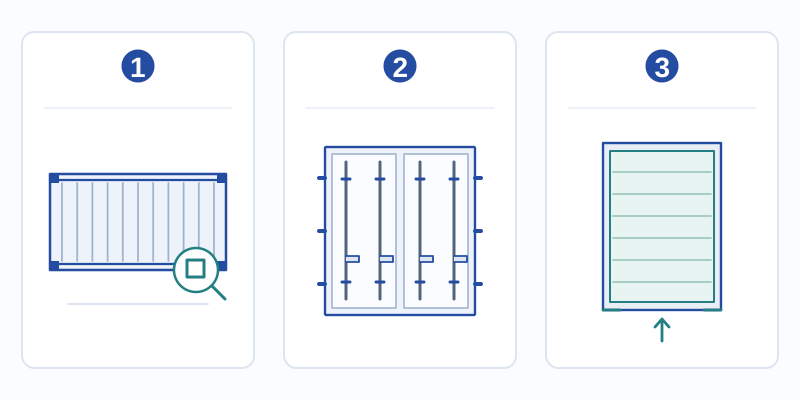
Visual reference
- Structure
- Doors and mechanisms
- Floor
Illustrative diagram, not to scale.
Surface rust and metal that has lost thickness are not treated the same way. If in doubt, get a technical opinion: a photo doesn't always show how serious a defect is. To see the roof or underside, ask for photos or an inspection with proper equipment. Don't climb on the container or crawl underneath it.
Inspect the doors, interior and floor safely
Look at the handles, locking bars, hinges, and gaskets. Have the doors opened and closed completely. A door that rubs, a misaligned door, or a handle that takes a lot of effort needs an explanation. Also check that the container is set down properly: badly adjusted supports can make the doors hard to move. If you want to add a padlock, ask if it fits these fittings.
Only enter if it is safe to do so. Report any residues, unusual smells, treatment markings or missing information about what was stored there before. Smell alone cannot tell you whether the air is safe. If in doubt, stay outside. Never let anyone lock you inside the container to check for holes that let daylight in. Even if no daylight comes through, water may still be able to get in.
From a safe, authorised viewing position, look at the floor, the joints, and any water marks. Holes, areas that are coming apart, or unexplained stains need to be checked. Do not put a load on a doubtful area to see if it holds. For food, archives, or a space where people will work, ask about cleanliness and what the container was used for before. The words "good condition" are not enough.
Decide what to do about each defect
For each defect, note where it is, what you see, and what still needs to be done. Is it a mark you can accept? Does it need an explanation, a repair, or a specialist's opinion? This list is more useful than a simple "good condition" comment, which can hide an important problem.
A low price does not settle a doubt about safety or condition. If a repair is planned, ask exactly what will be repaired and how the result will be checked. Wait for the missing information before you decide. If the container does not meet your needs, it is better to compare another one than to assume the work will be simple.
| Observation | Photos and information to keep | To check before buying |
|---|---|---|
| Scratch or dent considered cosmetic | Wide view and detail of the area | Check that the defect does not spoil the appearance you want or affect how you plan to use the container. |
| Corrosion with loss of material or doubtful joint | Location and photos, without destructive testing | Have it checked by a professional or choose another container |
| Hard-to-open door or worn seal | How the door opens and closes, and the condition of its parts | Identify the cause, plan the repair, and check the result |
| Water stain, residue, or unexplained odor | The affected area and any known past uses or incidents | Have the cause checked before you decide the container is watertight or clean. |
| Missing document or identification | List of missing information | Get the missing information before confirming that the container meets your needs. |
Do the checks remotely
Send the seller a precise list of the photos you want. Ask for an overall view of each side, then close-up photos of the defects. For the doors and interior, a continuous video can help you understand what photos don't show. It doesn't replace a structural inspection. Also ask the seller to add the reported defects to the written description of the container.
If the images aren't enough for your project, plan a visit or professional inspection before you commit. The goal is simple: know what you're buying and avoid a bad surprise at delivery. Agree with the seller on the checks to be done and the sales conditions that apply to your purchase and your country.
Check the container on delivery
Keep the quote, photos, and messages with the seller for delivery day. When the professional lets you approach, check the container number, the defects already reported, the promised repairs, and the included equipment. Once the container is set down, try the doors without forcing them. If they close poorly, also have the supports checked before you conclude the door is the problem.
Photograph any differences and report them following the conditions agreed with the seller and the carrier. Wait until unloading is finished and the professional gives you permission to approach. The goal is to keep a record of what was bought and delivered before you start filling the container.
Checklist to keep for purchase and delivery
- What you want to store and the points that matter most to you.
- The model reference and the number of the container offered.
- Recent photos that clearly show the same container.
- The condition of the container body and any rust, observed safely.
- Opening and closing of the doors, as well as the seals.
- The condition of the floor, traces, and known previous uses.
- The inspection documents needed for your project.
- A response or planned action for each defect.
- The repairs and equipment listed in the quote.
- The quote and photos at hand for checking the delivery.
Find the right type of container
Containers to compare
Models in stock. Indicative prices exclude tax, transport, and unloading. The images show the models: ask for recent photos of the container you are buying.
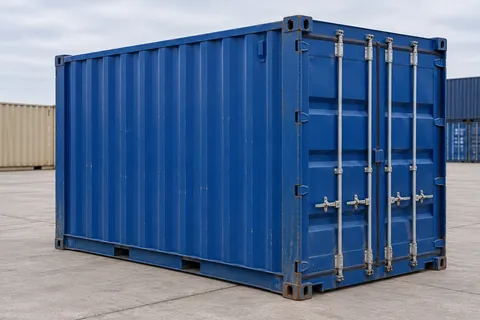
CA-10-STANDARD-A-BLUE
Container 10 ft Standard · Used · excellent condition · Blue
Used · excellent condition / Blue
AED 9,717Indicative, excl. tax
Request an offer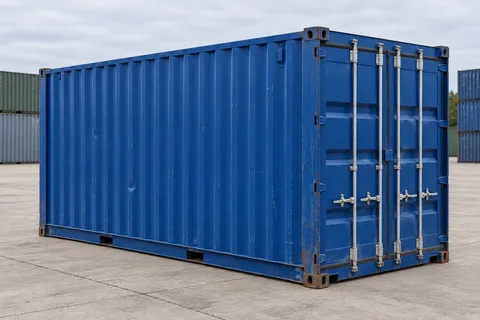
CA-20-STANDARD-A-BLUE
Container 20 ft Standard · Used · excellent condition · Blue
Used · excellent condition / Blue
AED 5,248Indicative, excl. tax
Request an offer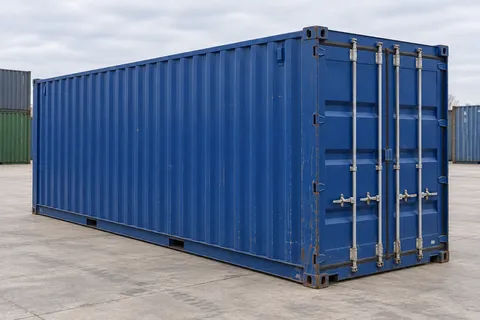
CA-40-STANDARD-A-BLUE
Container 40 ft Standard · Used · excellent condition · Blue
Used · excellent condition / Blue
AED 5,453Indicative, excl. tax
Request an offerPractical questions
Is a description of "good condition" enough to buy?
No. It gives a first idea of the container's condition. Ask for recent photos, known defects and repairs, then check that the container suits what you want to do with it.
If you don't see light inside, is the container watertight?
Not necessarily. Water can get in through a seal or a gap that doesn't let light show. Never let yourself get locked inside to do this test. Ask the professional for a safe and suitable check.
Can I store fragile or sensitive goods in a used container?
It depends on how clean the container is, what was stored in it before, and what your goods need. The word 'used' or a CSC plate doesn't tell you all that. Have the necessary checks spelled out before you put your things in it.
Technical references
- HSE — Freight container safety
Tips for spotting defects and inspecting or moving a container safely. The rules mentioned apply to the UK.
- IMO — International Convention for Safe Containers
The CSC convention covers safety checks for international transport. It doesn't certify how clean the container is or whether it's still compliant after being converted into a building.